 Homerun
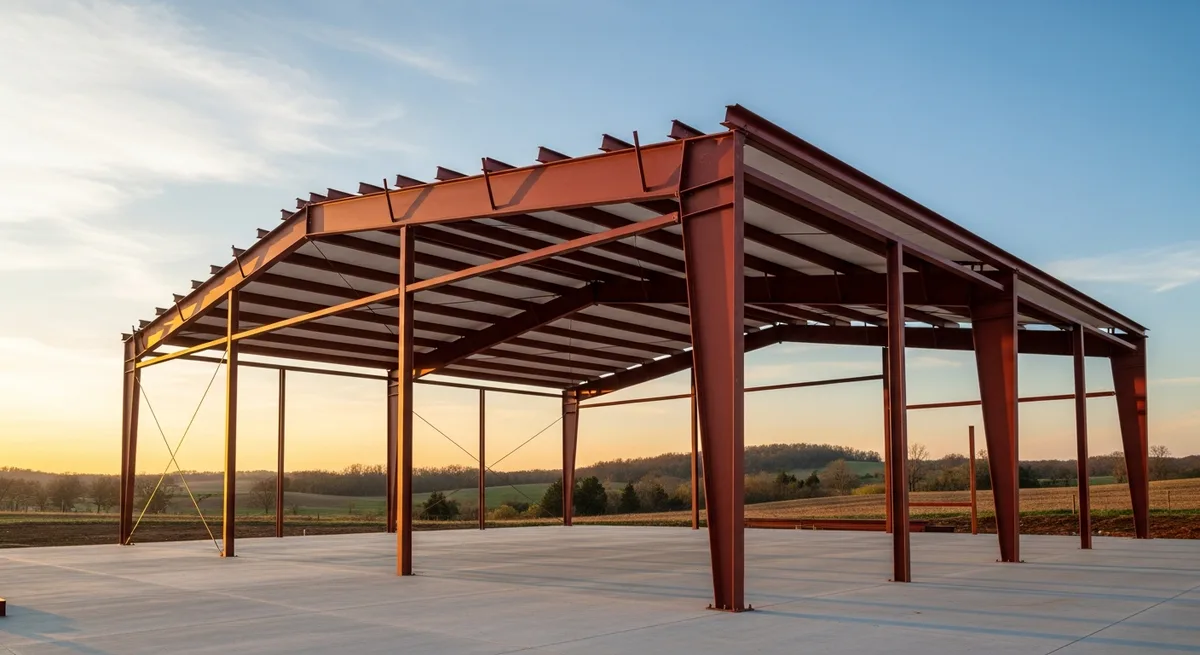
Shipping container homes are a Pinterest sensation — and a real category, since you can buy a used 40-ft container for $3,000–$6,000 and dream about turning it into a $300/sq ft micro-villa. But the math, once you actually convert, almost never beats a purpose-built steel kit. Here's the side-by-side.
What you're actually starting with
A used 40-ft shipping container gives you 320 sq ft of corrugated weathering-steel box with a wood floor (often treated with pesticides that need to be sealed or replaced), 8 ft 6 in ceiling height (or 9 ft 6 in for "high-cube"), and one set of cargo doors on the end. The walls are 14-gauge corten steel — very strong but very thin and conductive.
A steel building kit gives you a pre-engineered red iron or tubular frame designed for a residential or shop interior, with 9–14 ft ceiling height, real residential doors and windows in your chosen positions, and 26-gauge or 29-gauge insulated panels.
The honest cost comparison (1,000 sq ft of finished living space)
Shipping container build (3 stacked 40-ft containers)
- 3 used 40-ft containers: $12,000–$22,000
- Delivery to site: $3,000–$6,000
- Foundation (piers + steel framing to tie containers): $14,000–$25,000
- Welding cut-outs for windows/doors + reinforcement (containers lose structural rating when you cut large openings, so engineers require recovery framing): $18,000–$32,000
- Spray foam insulation (the only practical option due to thin walls and steel thermal bridging): $12,000–$22,000
- Interior framing for drywall, plumbing, electrical pathways: $8,000–$15,000
- Mechanicals + finishes: $55,000–$95,000
- Roof + waterproofing (containers leak at seams over time): $8,000–$18,000
- Total: $130,000–$235,000 — roughly $130–$235/sq ft
Steel building kit (32×32 tubular shell, finished as residence)
- Kit shell: $24,000–$38,000
- Delivery: $1,500–$3,500
- Foundation (slab): $14,000–$22,000
- Insulation (standard batt or rigid in framed walls): $4,000–$8,000
- Interior framing for partitions: $6,000–$11,000
- Mechanicals + finishes: $55,000–$95,000
- Total: $104,500–$177,500 — roughly $105–$178/sq ft
The kit comes in 20–25% cheaper on the same square footage — and that's before accounting for the welding labor and engineering recovery costs that vary heavily on container projects.
Why containers are pricier than they look
- Cutting destroys the structure. The corrugated steel walls are part of the container's load-bearing system. Every window and door cutout requires welded steel reinforcement to restore the structural rating. This is real engineering work, not DIY.
- Insulation is a fight. The thin steel wall has zero R-value and acts as a giant thermal bridge. Spray foam (closed-cell) is the only effective option — and it's expensive per square foot of wall area.
- Layouts are constrained. An 8-ft-wide container with structural columns at the corners forces shotgun-style floor plans. Stitching multiple containers together adds welding and waterproofing complexity at every seam.
- Permitting is harder. Many jurisdictions are still suspicious of container homes and require engineered plans, additional inspections, and proof that the container hasn't carried hazardous cargo.
When a container home actually makes sense
- Single 40-ft container as a small office, studio, or guest cabin — no cutting beyond a door and one window, no multi-container stitching, no full bathroom. You can do this for $20,000–$40,000 all-in if you DIY.
- You're going for a specific architectural look and the container aesthetic is genuinely the goal, not the cost. (This is the honest reason for most container homes.)
- Mobility/relocatability matters more than livability. A finished container can be re-cranned onto a truck and moved; a kit-built home cannot.
Resale and insurance
Steel kit-built homes appraise as conventional residential property. Container homes appraise as a question mark — most rural appraisers have no comps and discount significantly, while urban appraisers in tech-heavy markets sometimes price them at a premium. Insurance is more expensive on container homes because most carriers don't have actuarial data on them; expect 15–30% higher annual premiums than an equivalent kit-built home.