 Homerun
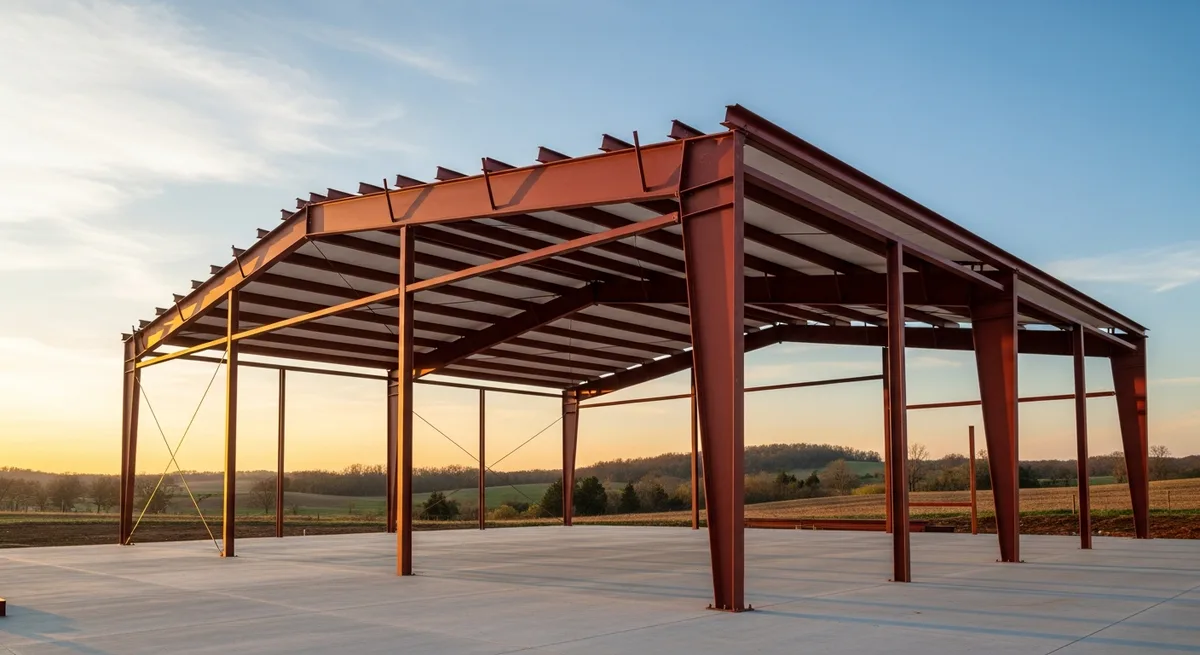
If you've quoted two metal buildings of the same size and gotten dramatically different prices — say $14K vs $24K for a 30x40 — the difference is almost always the framing system. Red iron and tubular steel are the two dominant framing types for pre-engineered metal buildings, and they're not interchangeable. Here's what each one is, when each makes sense, and why the price gap exists.
What is red iron?
Red iron is hot-rolled structural steel — solid I-beams, wide-flange beams, and angle iron — formed at the steel mill from molten steel. It gets its name from the red oxide primer painted on the steel after fabrication to prevent surface rust during shipping and erection. Red iron is the same structural steel used in skyscrapers, bridges, and large commercial buildings, just sized smaller for low-rise applications.
Red iron buildings use clear-span primary frames (rigid frames) that don't need interior columns. The frame is bolted together on site from prefabricated members. Secondary framing (purlins, girts) is typically cold-formed steel C or Z sections.
What is tubular steel?
Tubular steel for buildings is cold-formed 12-gauge or 14-gauge square or rectangular tube — bent and welded into shape from coiled steel sheet. It's lighter than red iron, fabricated to exact dimensions, and shipped as a complete tube assembly that bolts together. Most carport and small-building manufacturers use tubular steel because it's easier to ship, easier to erect, and fabricated in standard modular sizes.
Engineering differences that matter
Span capacity. Red iron clear-spans up to 200+ feet without interior columns. Tubular steel typically tops out at 40–60ft clear span before requiring interior columns or web trusses. For shops, garages, and most barns under 50ft wide, both work. For warehouses, riding arenas, or aircraft hangars over 60ft wide, red iron is required.
Eave height. Tubular steel is typically offered up to 16ft eaves. Red iron commonly goes to 20ft, 24ft, or higher with engineering. For RV storage with 14ft+ doors, tall industrial uses, or two-story interiors, red iron has the advantage.
Snow and wind loads. Both can be engineered for high loads. Red iron handles extreme loads (hurricane wind, heavy snow) more efficiently — less material is needed per square foot of building. In high-load areas red iron often comes out cheaper than tubular for the same engineered capacity.
Open vs. enclosed. Tubular steel is widely used for open carports and lean-tos. Red iron is more common for fully enclosed industrial use.
Cost differences
On standard sizes (under 40x60, eaves under 14ft, standard loads), tubular steel runs roughly 25–35% less than red iron for the same building footprint. The savings come from material weight (tubular is hollow) and simpler fabrication.
On larger sizes or high-load applications, the gap narrows or reverses — red iron's structural efficiency wins as the building gets bigger.
Erection and labor
Tubular steel buildings are easier to erect with a small crew because the members are lighter. A 2-person team can typically erect a 30x40 tubular building in 3–5 days. Red iron buildings of the same size usually need 3–4 people and a small crane or lift to set the primary frames — total time 4–7 days.
Red iron buildings are bolted assemblies that come apart cleanly if needed. Tubular steel uses similar bolt-together design with self-drilling fasteners on the sheeting.
When to choose each
Choose tubular steel for: carports, RV covers, small to medium shops (up to 40x60), agricultural shelters, and budget-driven projects in low/moderate load areas.
Choose red iron for: commercial use, larger buildings (over 40ft wide or 14ft eave), high-load areas (heavy snow or coastal wind), aircraft hangars, large agricultural buildings, and any project where long-term durability and resale matters.
What about cold-formed steel for residential?
Cold-formed steel framing (similar gauge to tubular but in C-channel form) is increasingly used as an alternative to wood framing in barndominium and house-kit construction. It's not the same as tubular building framing — it's smaller members designed to replace 2x4 and 2x6 lumber. We can quote cold-formed steel residential packages alongside our wood-framed kits.
Talk to Our Team about which framing system fits your project at 765-748-6067.