 Homerun
Barndominiums got popular fast. Pinterest, HGTV, and a wave of YouTube content turned them into a real category — and for the right buyer in the right place, they make sense. House kits do too. The two products solve overlapping problems but with very different trade-offs. Here's how to think about which one fits your situation.
What a barndominium actually is
A barndominium is a residential structure built inside a metal building shell. The shell is typically a red iron or tubular steel kit — the same product we sell for shops and warehouses, sized larger and finished out for living. Insulation, framing for interior walls, mechanicals, drywall, and finishes go inside the steel envelope.
What a house kit is
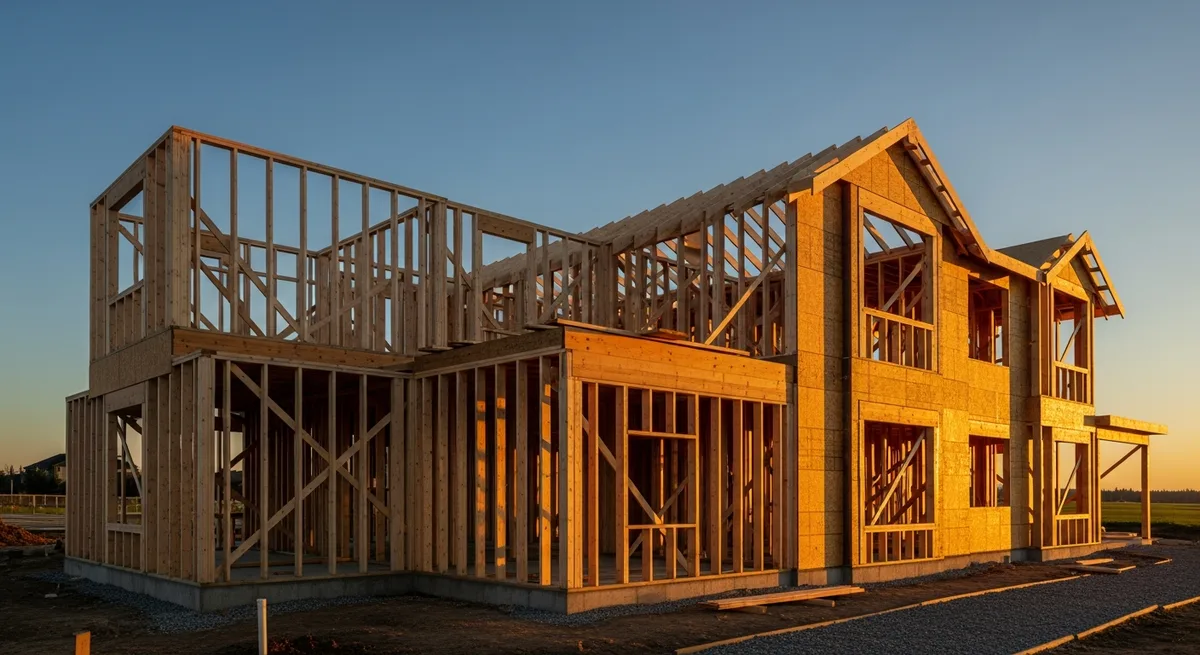
A house kit is a pre-engineered wood-framed residential structure. Walls are 2x4 or 2x6 stick framing, roof is trusses or rafters, exterior is sheathed and ready for siding. From the outside, a finished kit home looks identical to a stick-built home — because structurally, that's what it is, just with the framing pre-cut and the engineering pre-done.
Real cost comparison
Barndominium shell + interior buildout (1,800 sq ft): $35K shell + $90K–$140K finish = $125K–$175K total
House kit + finish (1,800 sq ft): $52K kit + $95K–$135K finish = $147K–$187K total
Barndo wins by $15K–$20K in raw cost when both are owner-built. The savings come from the steel shell being slightly cheaper than equivalent wood framing for larger spans. The advantage shrinks as you add insulation, vapor barrier, and interior framing — all of which are needed inside a metal shell but already done in a wood-framed kit.
Where barndominiums win
- Long clear spans without interior load-bearing walls — great for open shop/living combos
- Lower fire risk to the structural shell (steel vs. wood)
- Faster shell erection (3–7 days vs. 5–10 days for kit framing)
- Pest resistance (no termites in the structural members)
- Lower insurance premiums in many states
Where house kits win
- Better resale value in conventional residential markets
- Easier to insulate to high R-values (insulation in framing cavities)
- Looks like a normal house — important if zoning or HOA matters
- More straightforward financing — most lenders treat kits as standard residential
- Better acoustics and humidity control
- Easier to add second story or modify later
Insulation and condensation reality check
The biggest livability challenge with barndominiums is condensation. Steel skin meets warm interior air — moisture forms on the steel. Without proper vapor barrier and an air gap behind the interior walls, you get drips, mold, and wood rot in the interior framing. The fix is closed-cell spray foam (R-13 or higher) directly to the steel skin. That's a $12K–$20K line item for a 1,800 sq ft barndo and it's not optional.
House kits have insulation cavities built into the framing — standard 2x6 walls accept R-19 fiberglass or R-21 mineral wool out of the box. No condensation engineering required.
Zoning and resale considerations
Some counties and HOAs restrict metal-skinned residential structures. Verify zoning before you commit. Resale value varies hugely by region — barndos are widely accepted in Texas, Oklahoma, and parts of the rural South. They sell at a discount in conventional suburban markets. House kits sell at full residential comp because they look and appraise like stick-built.
Financing differences
House kits qualify for standard construction-to-perm loans, USDA, and VA loans without much friction. Barndominiums can be harder to finance — many lenders won't fund a residential metal building, and appraisers may not have comps for them in non-rural markets. Specialty lenders exist; expect higher down payments and more documentation.
Bottom line
Barndominium for: shop+living combos, rural land where zoning is permissive, buyers who plan to stay long-term and aren't worried about resale. House kit for: anywhere a normal-looking home matters, conventional financing, and resale flexibility. We sell both — talk to our team about which fits your land and project at 765-748-6067.