 Homerun
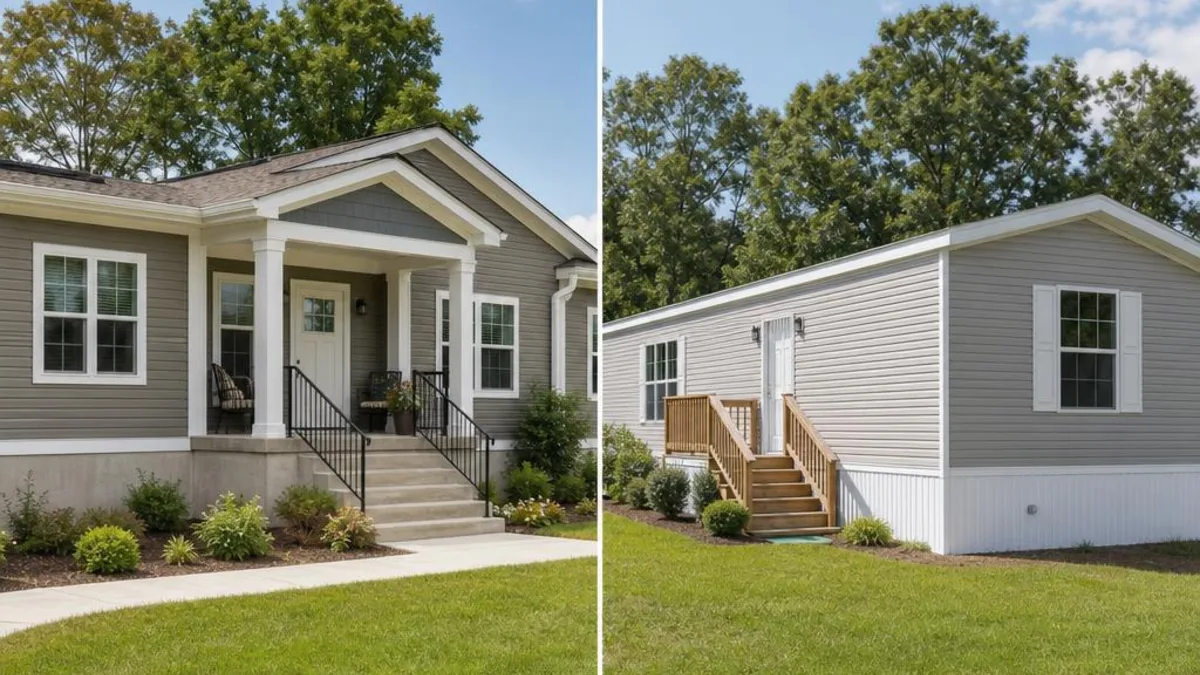
"Modular" and "manufactured" get used interchangeably by people who've never had to finance, insure, or resell one. They are not the same thing, and the difference isn't cosmetic — it's the building code the home is built to, and that one fact cascades into everything that matters about owning it.
The code decides everything
A modular home is built in a factory to the IRC — the same residential building code as a site-built house — then set on a permanent foundation and inspected like any other new home. In the eyes of your county, your lender, your insurer, and the next buyer, it is a site-built house.
A manufactured home (what used to be called a mobile home) is built to the federal HUD code on a permanent steel chassis. It's legal, it's livable, and it's cheaper up front — but it's a different legal category of property, and the market treats it that way for the life of the home.
Side by side in 2026
- Appraisal: Modular appraises against site-built comps and appreciates with the market. Manufactured homes typically depreciate like a vehicle unless permanently affixed and titled as real property — and even then, comps are limited to other manufactured homes.
- Financing: Modular qualifies for conventional, FHA, VA, and construction-to-perm loans at standard rates. Manufactured often means chattel (personal-property) loans — commonly 3–6 points higher interest with shorter terms.
- Insurance: Modular is insured as a standard dwelling. Manufactured homes carry specialty policies that often cost more for less coverage.
- Zoning: Many counties and HOAs prohibit manufactured homes outright. Modular homes are permitted anywhere a site-built home is.
- Construction: Our modulars use 2×6″ exterior walls and 2×10 open-web floor trusses — the same or beefier than typical site framing, because modules must survive highway transport and a crane set.
- Resale: A modular home sells as a house. A manufactured home sells as a manufactured home — a smaller buyer pool on tougher financing.
Why manufactured looks cheaper (and often isn't)
A new double-wide can run $85,000–$160,000 — genuinely less than a modular up front. But run the 10-year math: higher loan rates, higher insurance, depreciation instead of appreciation, and a resale discount. For a buyer who plans to own for more than a few years, the modular's premium is usually recovered several times over. If your budget truly can't stretch, a wood-framed house kit plus sweat equity is a stronger path to real, appreciating equity than a depreciating HUD-code home.
How to tell what you're being sold
Ask one question: "Is this home built to the IRC or the HUD code?" If the seller hedges, look for the HUD red certification label on the exterior of each section — that's a manufactured home. Every Smart Home Modular is IRC code-compliant, factory-inspected, and set on a permanent foundation, which is why they're appraised, financed, and resold the same as a site-built, stick-frame home. See real prices for all six models on our modular home prices page, or start with the full cost guide.