 Homerun
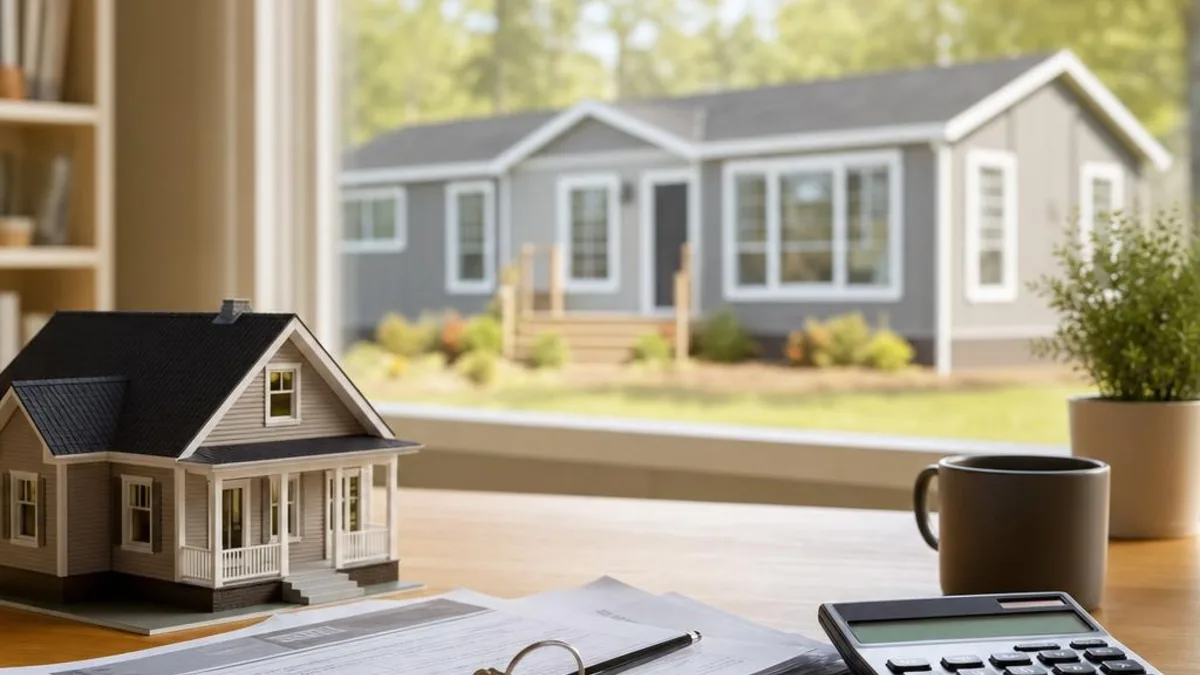
Here's the sentence that surprises most modular shoppers: you finance a real modular home exactly like a site-built house. Conventional, FHA, VA, USDA, construction-to-permanent — all of it applies, because an IRC-code modular home on a permanent foundation is real property. The horror stories you've heard about factory-built home financing are about manufactured (HUD-code) homes — a different product entirely (here's the difference).
The workhorse: construction-to-permanent loans
Most modular buyers use a construction-to-perm (CP) loan: one closing, one set of fees. The loan funds the land (if needed), foundation, home purchase, delivery, and finishing during construction, then automatically converts to a standard 15- or 30-year mortgage at completion. Because a modular build runs 60–120 days instead of 9–18 months, you pay months less interest-only carrying cost than a site-built borrower — a quiet four-to-five-figure saving nobody advertises.
Your loan options in 2026
- Conventional CP loan — best rates for buyers with solid credit and 10–20% down. The finished home appraises against site-built comps.
- FHA construction loan — down payments as low as 3.5%, friendlier credit requirements, slightly more paperwork.
- VA construction loan — for eligible veterans and service members: zero down and no PMI on a brand-new modular home. Underused and outstanding.
- USDA construction loan — zero down in eligible rural areas, which covers a lot of the land our buyers build on.
- Land equity as down payment — already own your lot? Most lenders count its value toward your down payment, sometimes covering it entirely.
The one trap: don't get chattel-loaned
If any lender offers you a chattel loan — personal-property financing, typically 3–6 points higher interest on a 15–23 year term — walk away. Chattel is for HUD-code manufactured homes. An IRC-code modular on a permanent foundation qualifies for a real mortgage, and any lender who says otherwise doesn't understand the product. Confirm two things in writing with any lender: the home is built to the IRC, and it will be titled as real property on a permanent foundation. Every Smart Home Modular checks both boxes.
How the money flows
Lenders disburse in draws tied to milestones: land/foundation, home order (the factory requires a deposit to schedule your build slot), delivery and set, and final completion. Your lender inspects at each stage. Because the home arrives 80–90% complete, there are fewer draws and fewer inspection delays than a stick build — another reason CP lenders like modular.
What it takes to qualify
The same things as any mortgage: credit score (620+ for most conventional CP programs, lower for FHA/VA), debt-to-income under roughly 43–45%, and down payment or land equity. Get pre-approved before you order so your factory slot and your funding line up — the buying process guide shows where financing fits in the timeline.
For total project numbers to bring to your lender, use the 2026 modular cost guide and the published price list. And for lender referrals who know factory-built homes — including our featured partner BuildBuyRefi — see our financing page or call 765-748-6067.