 Homerun
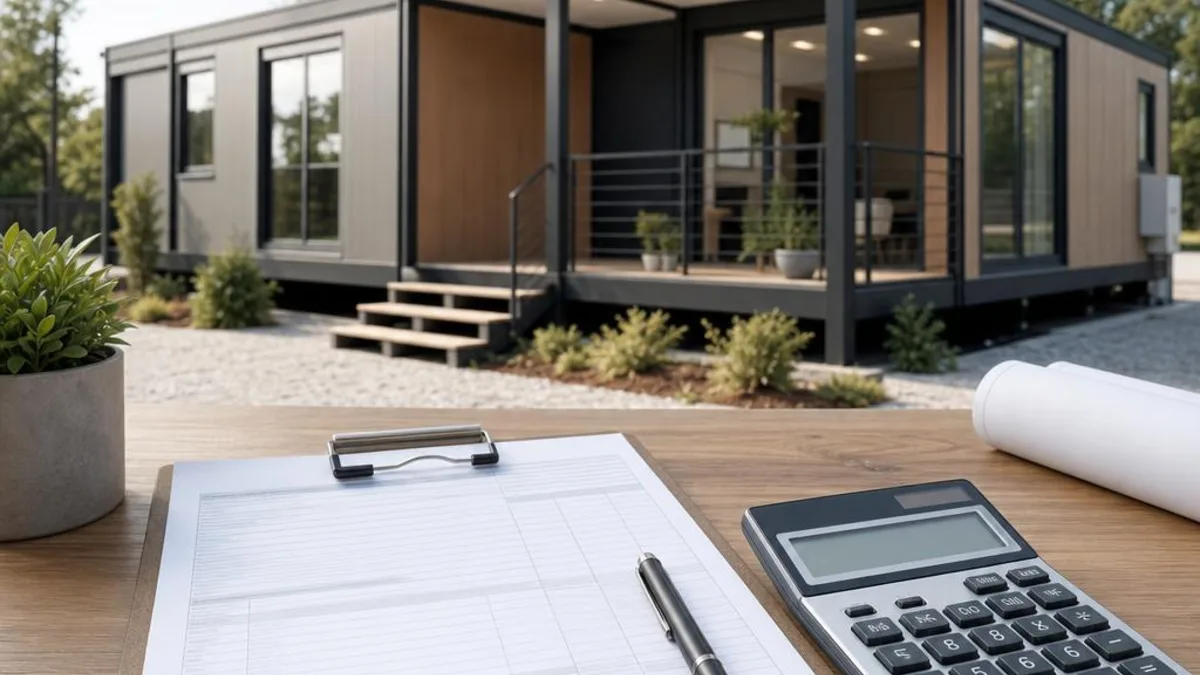
Ask most modular home sellers what a home costs and you'll get a sales call, not a number. So here are ours: in 2026, our factory-built modular homes run $142,150 to $242,300 for the home itself — every model published on our modular home prices page. But the home price is only part of the project, so let's walk the whole budget.
The home itself: $142,150–$242,300
Single-family 3 bedroom modular homes start at $142,150 (the Birch, 1,067 sq ft) and run to $220,150 for a 1,330 sq ft two-story (the Hickory). Two-unit modular duplexes — popular for rental income and multi-generational living — run $235,100 to $242,300. That works out to roughly $130–$166 per square foot for the home itself, and it arrives 80–90% complete: drywall up, cabinets in, plumbing and wiring installed, HVAC and water heater included, plus a Smart Home Package and stainless appliance package standard on every model.
The site side: what to add on top
The published price is the home only. Here's what the rest of a typical project looks like in 2026:
- Foundation: $15,000–$30,000 for a crawlspace or slab; $30,000–$55,000 for a full basement.
- Delivery + crane set: $10,000–$20,000 depending on distance from the factory and site access.
- Button-up and finishing: $20,000–$40,000 — stitching modules together, finishing seams, porches, utility hookups, final trim.
- Site work: $10,000–$40,000 if you need a driveway, well, or septic on rural land.
- Permits and sales tax: varies by county and state.
Add it up and most buyers land $45,000–$110,000 on the site side, or roughly $170–$230 per square foot all-in before land. Comparable site-built construction runs $150–$300+ per square foot in most markets — and takes 9–18 months instead of 60–120 days.
Why modular usually beats site-built on cost
Three reasons. First, factory framing labor is cheaper and dramatically more efficient than site crews — no rain days, no no-shows, no material walking off the job. Second, the factory buys materials at volume and wastes almost none of it. Third, the compressed timeline saves real money: every month you're not paying construction-loan interest, rent, and a second set of utilities is money in your pocket. Most buyers land 10–25% under a comparable stick build with far more schedule certainty.
What moves the number up or down
- Foundation type — a basement adds $20,000–$30,000 over a crawlspace but adds usable square footage cheaper than any other way to buy it.
- Distance and access — tight sites, long hauls, and difficult crane positions add cost. Flat, open rural lots are cheapest.
- Model choice — a duplex costs more up front but generates rent from day one; the Belvidere's two 2BR/2BA units are separately metered for exactly that.
- Options — like the Sycamore's optional site-built 2-car garage ($54,000).
Modular vs. the alternatives
If you're cross-shopping construction types: a wood-framed house kit can come in 25–40% cheaper if you swing hammers yourself, but takes months longer and demands real sweat equity. A manufactured home is cheaper up front but is a fundamentally different product — built to HUD code on a chassis, financed on worse terms, and typically depreciating. We break that down in modular vs. manufactured homes. And when you're ready to see how the money side works, read how to finance a modular home.