 Homerun
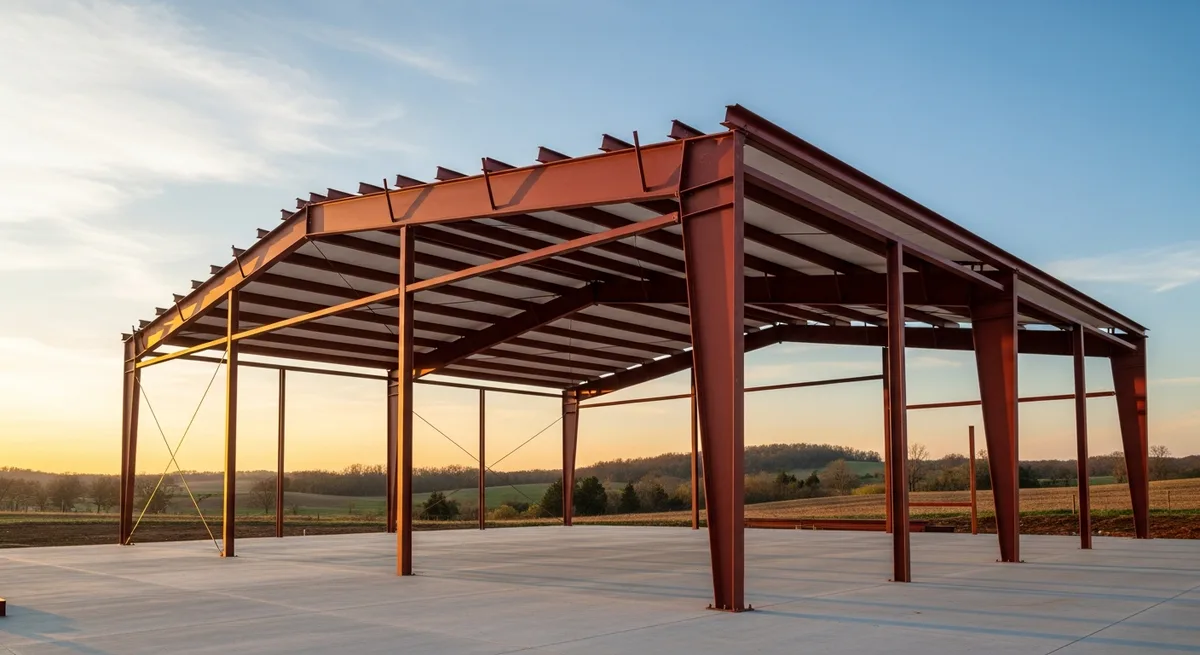
The biggest mistake we see on carport orders: people buy by footprint instead of by clearance, roof style, and enclosure — then their RV won't fit, or the snow slides off the wrong way, or the boat trailer hits the door header. Here's a use-case-by-use-case guide to picking the right cover.
For Class A and large Class C RVs (35–45 ft)
Recommended size: 18×46×14 or 20×51×14. The 51-ft length gives you a 5-ft tail buffer for slide-outs and rear ladders. The 14-ft eave clears any roof AC, satellite dome, or solar array on top.
Recommended roof: A-frame vertical. Standing height + vertical panel = snow and pine needles slide off instead of building up over the unit.
Enclosure: Open-sided is fine for most climates, but a single side wall on the prevailing-wind side keeps driven rain off the slide-out seals. Full enclosure with a 12×14 roll-up door is the premium option.
For Class B vans, small Class C, and travel trailers (under 30 ft)
Recommended size: 12×26×12 or 18×31×12. The 12-ft eave clears van high-tops and small Class B/C roofs. Travel trailers can go shorter eave (10 ft) if they're not a high-profile model.
Recommended roof: A-frame horizontal for mild climates, vertical for snow zones.
Enclosure: Often open. A two-sided wind-break configuration works well in plains states.
For boats on trailers (bass, ski, pontoon)
Recommended size: Trailer length + 4 ft × trailer width + 4 ft × at least 12 ft eave for pontoons or center-console boats. A typical 20-ft bass boat on a trailer fits comfortably under 12×26×10.
Recommended roof: A-frame horizontal for short units, vertical anything over 26 ft long.
Enclosure: Open is the norm. If you store covered with a fabric cover already, an open carport is plenty. If you don't cover the boat itself, partial enclosure with end walls keeps pollen, sap, and bird droppings off.
For pontoon boats and large center consoles
Recommended size: 18×31×12 minimum. Pontoons are tall — measure the height from the bunks to the top of the bimini frame, and add 18 inches for the unit's truss above your head.
Roof: A-frame vertical, definitely. Pontoon bimini frames don't tolerate snow build-up.
For skid-steers, mini-excavators, and small tractors
Recommended size: 20×26×10 covers a CTL plus a 6-ft bucket attachment and a couple of pallets of materials. For sub-compact tractors with loaders, 18×26×10 works.
Roof: A-frame horizontal is fine. The bigger consideration is enclosure — fully enclosed with a 10×10 roll-up door dramatically reduces theft risk and keeps tracks from icing up in winter.
Walls: 12-gauge frame is worth the upgrade. Equipment storage is harder on a structure than vehicle storage (tracks bump into posts, attachments scrape walls).
For full-size tractors with cabs
Recommended size: 24×31×14 minimum for a row-crop tractor with FEL. Cab height plus exhaust stack is the limiter — measure your tallest unit before ordering.
Roof: A-frame vertical, always. The eave height needs to clear the cab, and the building length needs to clear the loader bucket curled at full reach.
For commercial fleet and equipment yards
Anything beyond 30 ft wide or 50 ft long, we typically recommend stepping up from a carport to a real tubular shop — eave height is more flexible, you get insulation options, and the 50×100×14 footprint of a cold-pressed tubular shop is roughly the same per-square-foot price as a carport once you scale that big.
Climate-specific recommendations
- High snow (Rockies, Upper Midwest, Northeast): Always vertical roof. Always 12-gauge. Order with the snow-load engineering upgrade and confirm with your specialist.
- High wind (Plains, Gulf Coast): 12-gauge frame, extra anchoring on dirt sites, partial enclosure for windbreak on the prevailing side.
- Coastal salt air: Spec a galvanized frame with an additional powder-coat layer. Plan to pressure-wash twice a year.
- Heavy sun (Southwest): Lighter-colored roof (Galvalume or light gray) drops the under-unit temperature by 10–20°F vs. a dark color in summer.