 Homerun
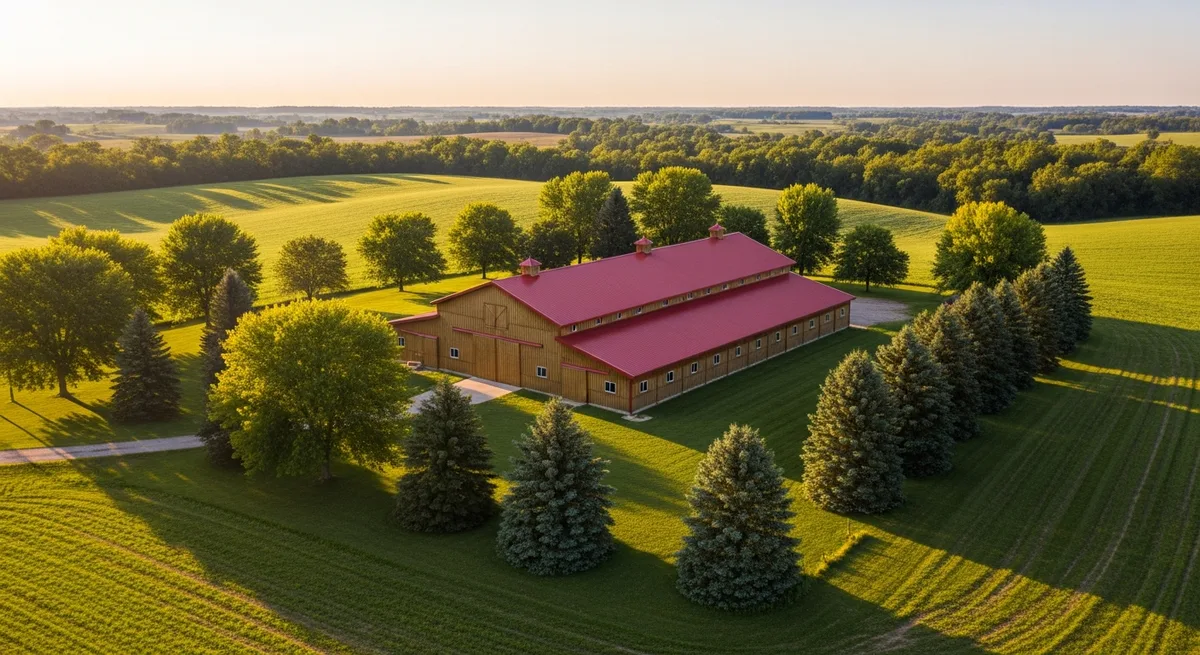
If you're shopping for a barn, shop, or storage building, you've probably already noticed that pole barns and steel buildings often quote at similar price points but look like very different products. They are. The choice usually comes down to use case, foundation budget, and how long you plan to keep the building. Here's the comparison without the marketing spin.
How each is built
Pole barn (post-frame): Wooden posts (typically 6x6 treated) set in the ground or on concrete piers. Horizontal wood girts span between the posts. Roof trusses sit on top. Metal sheeting covers the walls and roof. Floor is typically gravel or concrete poured later.
Steel building (pre-engineered metal): Steel primary frame (red iron I-beams or tubular cold-formed) bolted to anchor bolts in a concrete slab. Steel secondary frame (purlins, girts) attached to primary frame. Steel sheeting covers walls and roof. Slab serves as the floor.
Cost comparison — same 40x60x14 building
- Pole barn kit: $22K–$32K. Posts on piers (no slab): add $4K–$8K. Concrete floor poured later (optional): $12K–$18K.
- Tubular steel kit: $28K–$38K. Required concrete slab with anchor bolts: $14K–$20K.
- Red iron steel kit: $36K–$48K. Required concrete slab with anchor bolts: $14K–$20K.
Pole barns are cheaper when you can skip or defer the concrete floor. Steel buildings require a slab from day one because the structure bolts to it. For uses that don't need a finished floor (equipment storage, hay, lumber), pole barns win on cost.
Lifespan and durability
Pole barn structural lifespan depends entirely on the post system. Posts set directly in the ground (the cheapest method) can rot at the soil line in 25–40 years. Posts on concrete piers or in plastic post protectors can last 60+ years. Above-grade wood members are protected by the roof and metal cladding and last indefinitely.
Steel buildings have no organic structural material. The frame, properly maintained, lasts 50–100+ years. Paint touch-ups every 10–15 years, panel replacement at 30–40 years if exposed to harsh climate. The slab outlasts everything.
Permitting and code differences
Many rural counties allow pole barns under simpler agricultural building permits, especially when used for non-residential agricultural purposes. Steel buildings typically require full structural permits with engineered drawings — which the kit ships with, so it's usually not a hassle, but it does mean a more thorough permit process.
Insurance considerations
Steel buildings are usually rated lower insurance risk than pole barns due to fire resistance and structural durability. Premium difference is small but consistent — typically 5–15% lower for similar use. Insurance companies in some states won't insure pole barns for high-value contents (think: collector cars, expensive equipment) without additional documentation.
Best uses for each
Pole barn wins: agricultural use, hay storage, equipment storage on dirt or gravel, horse barns, riding arenas, low-budget shop where you'll add concrete later.
Steel building wins: commercial workshop, automotive service bay, anything housing valuable equipment, residential garages where appearance matters, multi-purpose buildings that may need higher fire ratings.
Resale value
Steel buildings consistently appraise higher per square foot than pole barns in most markets — typically 20–35% higher for comparable size and finish. Pole barns appraise well in agricultural markets and rural counties; less well in suburban or commercial appraisals.
Quick decision framework
If you need a slab anyway → steel building probably makes sense. If you don't need a slab and want the lowest entry cost → pole barn. If lifespan over 50 years matters → steel building. If you're building for agricultural use under a relaxed permit process → pole barn.
We sell both at Homerun. Talk to Our Team at 765-748-6067 if you want a price comparison on the same dimensions in both materials.