 Homerun
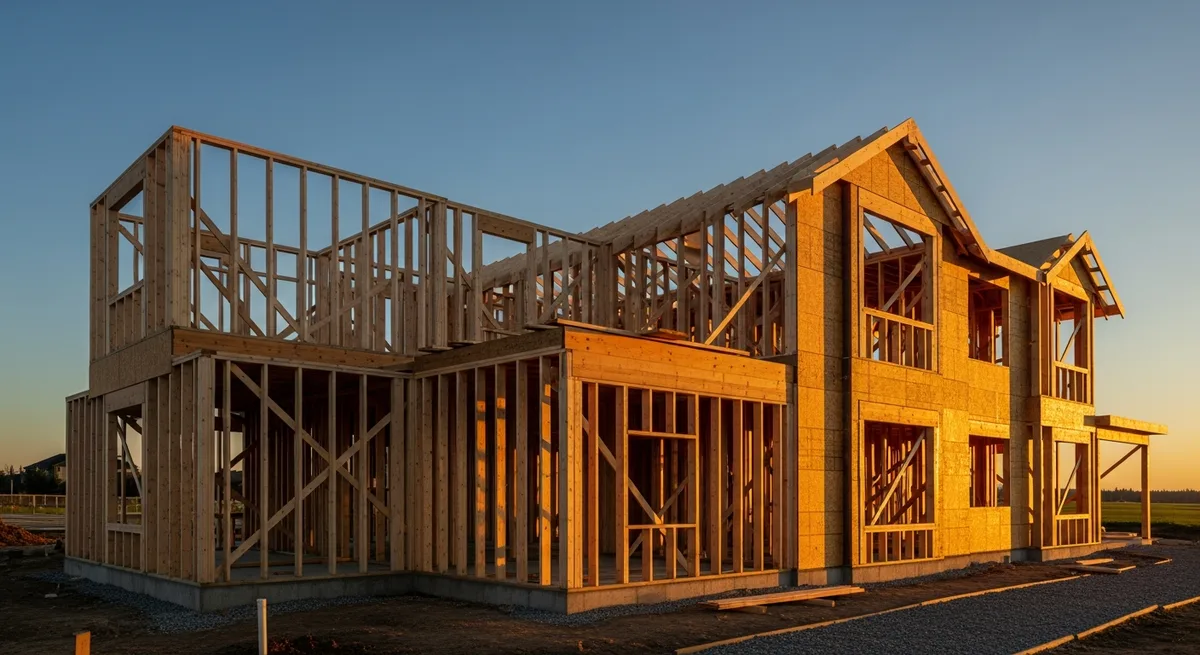
Building a brand-new house for under $100,000 in 2026 sounds aggressive — and in coastal metros, it is. But across large parts of the Midwest, South, and rural West, it's not just possible, it's how thousands of owner-builders are getting into a home they own outright. The recipe is consistent: affordable land, a slab foundation, a wood-framed house kit, and your own labor or a small local crew.
Here's exactly where the money goes when you do it right.
The under-$100K budget — line by line
- Rural land (1–5 acres): $8,000–$25,000
- Site clearing and grading: $2,000–$5,000
- Septic + well (if no city utilities): $8,000–$15,000
- Slab foundation (1,000–1,400 sq ft): $9,000–$14,000
- House kit (wood-framed, ~1,200 sq ft): $30,000–$45,000
- Roofing materials (often included in kit): $0–$4,000
- Insulation + drywall: $6,000–$10,000
- Plumbing rough-in + fixtures: $7,000–$12,000
- Electrical rough-in + service: $5,000–$9,000
- HVAC (mini-split or basic forced-air): $4,000–$8,000
- Kitchen + bath finish (budget tier): $5,000–$10,000
- Flooring (LVP throughout): $2,000–$4,000
- Permits and inspections: $1,000–$3,000
Total range: $87,000–$164,000. The under-$100K builds happen at the bottom of those ranges, which is where most of our owner-builder customers land when they have access to affordable land and do their own project management.
What makes the under-$100K build possible
Three factors compound in your favor. First, a kit-built home eliminates roughly $20K–$40K of framing labor and material waste compared to stick-built. Second, owner-builders save 15–25% by acting as their own general contractor and coordinating subs directly. Third, sweat equity on insulation, paint, flooring, and trim can save another $8K–$15K.
Plans that fit the budget
At under-$100K, you're typically looking at floor plans in the 700–1,400 sq ft range. Compact one-bedroom designs can run $30K–$36K in kit cost; two-bedroom plans around 1,000–1,200 sq ft run $36K–$45K. Larger plans push the budget over $100K once finishes are added. Browse our 47 floor plans to see real pricing on each.
The trade-offs to know before you start
Under-$100K builds work best when you're not in a rush, you have flexible job logistics, and you're not financing the entire project on a tight bank schedule. Many owner-builders move in with the structure tight to weather and continue finishing interior work over months. If you need a mortgage to occupy, you'll need to plan the schedule around the lender's draws.
You also need land that's already accessible. Properties requiring road extension, well drilling in rocky areas, or extensive grading can blow the budget by $20K–$40K before you've poured a slab. Verify septic perc, utility access, and road frontage before you buy.
Financing options under $100K
Construction-to-permanent loans typically have minimum loan amounts of $100K–$150K, which can be a barrier on smaller builds. Owner-builder loans, USDA rural development loans, and personal construction loans through lenders like LightStream and BHG Financial fill the gap. We cover financing in detail in our financing guide.
First step: get a real kit quote
The biggest unknown in the under-$100K budget is your kit cost, because it's locked in once you order. Pick a floor plan that matches your needs, get a written quote with delivery to your zip code, and you'll have a hard number to build the rest of the budget around. Click below to start a quote — no obligation, no pressure, no fake urgency.