 Homerun
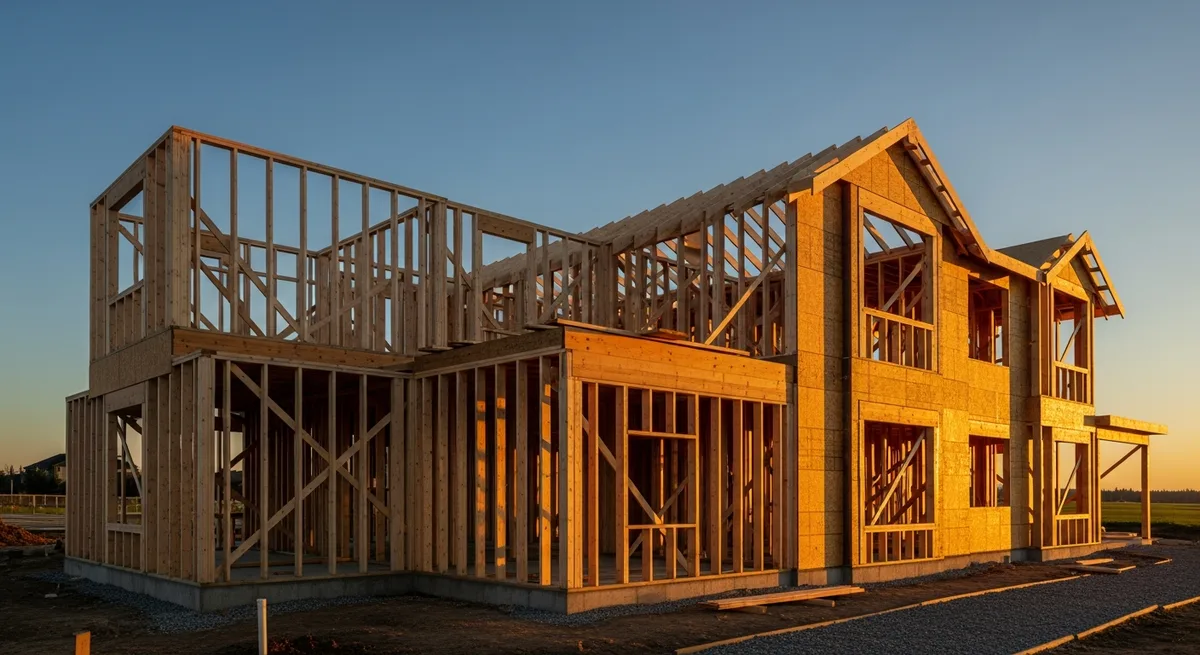
If you're trying to plan a build around a job change, lease end, or seasonal weather window, the timeline matters as much as the budget. The honest answer for a kit-built home is 4–9 months from order to move-in, with most projects landing around 6 months. Here's how that time actually breaks down — and where projects routinely slip.
Phase 1: Pre-order planning (2–6 weeks)
Before you order anything, you need a final floor plan, a finished site survey, soil/perc results if you're on rural land, and either a financing pre-approval or a clear funding source. Skipping any of these usually adds 2–4 weeks later. Get permits started in parallel with the kit order — most jurisdictions take 4–8 weeks to issue building permits.
Phase 2: Kit manufacturing and delivery (6–12 weeks)
Once you place the order, the manufacturer cuts and packages your kit to the engineering specs. Standard plans ship faster than custom modifications. Delivery is typically scheduled when manufacturing completes; you'll get a 7–10 day window. The actual delivery is usually 1–2 days on site to offload.
Phase 3: Site prep and foundation (3–6 weeks)
Site clearing, grading, and foundation pour can run in parallel with kit manufacturing — that's where you save calendar time. A simple slab takes 1–2 weeks from forming to cure-ready-for-framing. Crawlspace or basement foundations add 2–4 weeks.
Critical: don't pour the foundation until you've confirmed the kit's exact anchor bolt template and dimensions. Pouring early to a generic plan is the most common reason for expensive rework.
Phase 4: Framing and dry-in (1–3 weeks)
This is where kits dramatically beat stick-built. A 1,500 sq ft kit can be framed and dried-in by a 3–4 person crew in 5–10 working days. Stick-built equivalents commonly take 3–5 weeks. The shorter on-site time means less weather risk, less site theft exposure, and faster progress for the lender draw schedule.
Phase 5: Mechanical rough-in (3–5 weeks)
Plumbing, electrical, and HVAC rough-in happens after framing and before insulation/drywall. Schedule the rough-ins in parallel where possible. Each trade needs an inspection before you can close the walls. Inspector availability — not the trade work itself — is often the bottleneck.
Phase 6: Insulation, drywall, and interior finish (6–12 weeks)
Insulation: 2–4 days. Drywall hang/finish: 1–2 weeks. Trim, paint, flooring, cabinets, fixtures, appliances: 4–8 weeks depending on finish level and crew availability. This phase has the most variability and the most opportunity for owner-builders to save money with sweat equity.
Phase 7: Final inspections and certificate of occupancy (1–3 weeks)
Final electrical, plumbing, HVAC, and building inspections — then the certificate of occupancy gets issued. If anything fails inspection, allow 1–2 weeks per re-inspection cycle.
Total realistic timeline
- Aggressive (everything on schedule, owner-builder, simple plan): 4 months
- Typical (no major delays, ~1,500 sq ft, single-family): 6 months
- Common (one or two minor delays, mid-size plan): 7–8 months
- Slow (weather, permit, or trade delays): 9+ months
Where projects actually slip
In our experience the top causes of timeline slippage are: permitting delays (35% of projects), weather windows missed for foundation pour or framing (25%), trade scheduling (20%), and material delivery beyond the kit itself — windows, doors, cabinets (15%). Buying decisions made during construction (5%) also stretch timelines disproportionately because each decision can hold up dependent trades.
How to compress your timeline
Order your kit and start permits at the same time. Have your foundation contractor scheduled before the kit ships. Order finish materials (windows, doors, flooring) 8–10 weeks before you'll need them. Decide on every finish before construction starts — paint colors, fixtures, flooring — so trades aren't waiting on choices.