 Homerun
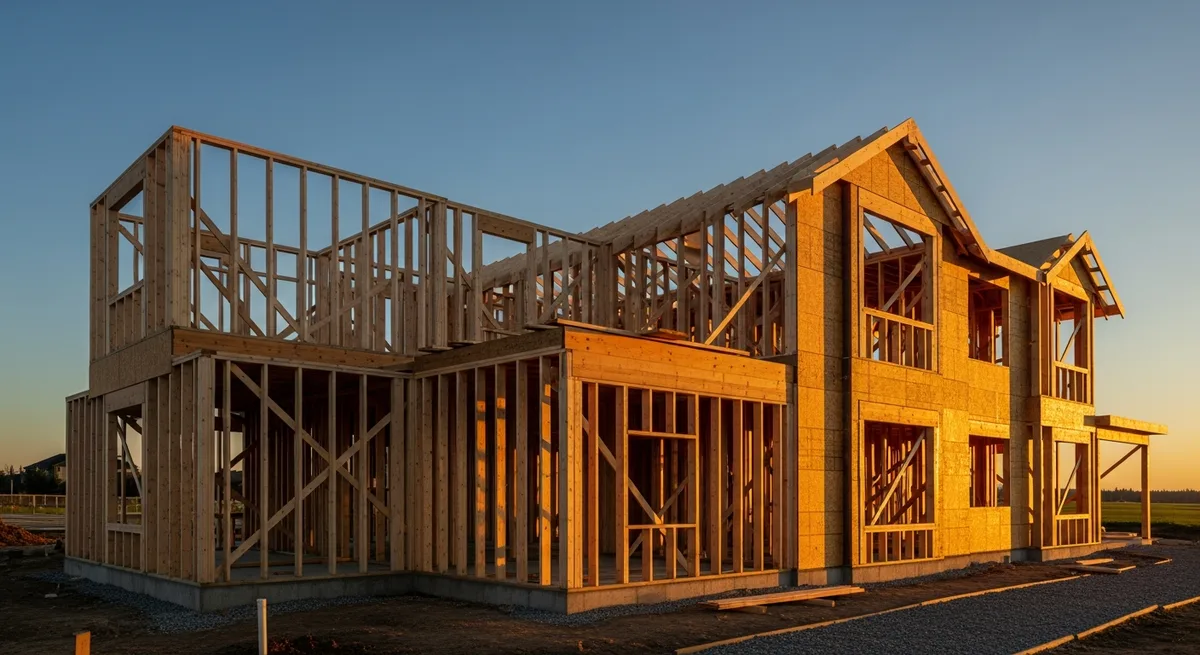
An Accessory Dwelling Unit (ADU) is a second, self-contained dwelling on a single-family lot — a detached cottage, a converted garage, or an attached in-law suite. Forty-plus states have liberalized ADU rules since 2020, and dropping a kit-built ADU on your existing lot is one of the highest-ROI moves a homeowner can make in 2026. Here's how it works.
What counts as an ADU
An ADU is a full second residence: it has its own kitchen, bathroom, sleeping area, and a separate entrance. It's permitted as a dwelling (not a shed, garage, or storage). It can be detached (in the backyard), attached (an addition to the main house), or interior (a basement or above-garage conversion). The minimum size in most jurisdictions is 220 sq ft; the maximum is typically 1,000–1,200 sq ft or 50% of the main house, whichever is smaller.
Where ADUs are easiest in 2026
California, Oregon, Washington, Colorado, Utah, Vermont, Massachusetts, and most metro areas of Texas have streamlined ADU permitting at the state level. In many of these places you can build an ADU "by right" — meaning the city must approve it as long as you meet the size and setback rules, with no public hearing, no neighbor notification, and no parking minimum. Rural and exurban counties vary; check with your county planning office before ordering.
Typical 2026 ADU kit pricing
- 400 sq ft studio kit: $14,000–$22,000 (kit only)
- 600 sq ft 1-bed kit: $19,000–$30,000 (kit only)
- 800 sq ft 1-bed + flex kit: $24,000–$38,000 (kit only)
- 1,000–1,200 sq ft 2-bed kit: $32,000–$52,000 (kit only)
All-in build cost (foundation, kit, utilities tap, mechanicals, finishes, permit fees) typically runs $180–$280 per sq ft in metro areas, and $130–$200 per sq ft in rural areas where labor and impact fees are cheaper. A finished 600 sq ft ADU usually lands at $108,000–$168,000 all-in in most U.S. markets.
Permit and utility considerations
The ADU needs its own electrical panel (or a sub-panel from the main house), its own water shut-off, and either a tie-in to the main sewer line or its own septic if rural. Some jurisdictions require an impact fee for the new sewer connection — typically $2,000–$8,000. Many cities have waived ADU impact fees entirely as of 2024–2026 to encourage construction.
Setbacks for ADUs are usually looser than for primary structures — California allows 4 ft side and rear setbacks for ADUs vs. 5–10 ft for the main house. This often lets you tuck an ADU into a back corner of the lot you couldn't otherwise build on.
Financing
The two main paths in 2026 (see our full financing page for partner details):
- HELOC on the main house — easiest if you have significant equity. You're essentially using your existing home as collateral to fund the ADU build. Rates in 2026 are running 8.5–10.5% variable.
- ADU-specific construction loan — newer products from RenoFi, Hometap, Point, and a handful of credit unions. These appraise based on the projected value after the ADU is built, which often unlocks more borrowing capacity than a HELOC.
The income math
The reason ADUs are exploding: rental income on a backyard unit in a desirable metro routinely covers the entire mortgage payment on the construction loan and then some.
A 600 sq ft 1-bed ADU in a Tier-2 metro (Boise, Asheville, Knoxville, Sacramento suburbs) rents for $1,400–$1,950/month in 2026. A $140,000 build financed at 8.5% over 30 years carries about $1,075/month — meaning the ADU usually generates $300–$900/month of positive cash flow before counting the property's appreciation in value.
In Tier-1 metros (LA, SF Bay, Seattle, Boston, Denver), the same 600 sq ft unit rents for $2,200–$3,400 and the math gets dramatically better — but build costs are also 30–50% higher.
Common kit configurations
- Tiny studio (12×20): 240 sq ft, kitchenette, 3/4 bath, lofted sleeping. Best for short-term rental or single occupant.
- Compact 1-bed (16×24): 384 sq ft, full kitchen, full bath, dedicated bedroom. Sweet spot for long-term rental.
- Spacious 1-bed (20×30): 600 sq ft, full kitchen with island, full bath, dedicated bedroom + small office nook. Premium rental tier.
- 2-bed family unit (24×40): 960 sq ft, full kitchen, full bath, 2 bedrooms. Often used for aging parents or returning adult children.
Three watch-outs before you order
- Owner-occupancy rules. Many cities require the owner to live in either the main house or the ADU, which can complicate rental as a pure investment. Check your local rules.
- Short-term rental restrictions. Many ADU-friendly cities prohibit using the ADU for STRs (Airbnb, Vrbo) — they want long-term housing. Confirm your rental plan is allowed.
- HOA covenants. Even where the city allows ADUs, an HOA may forbid them. Read your CC&Rs.